Skip to main content
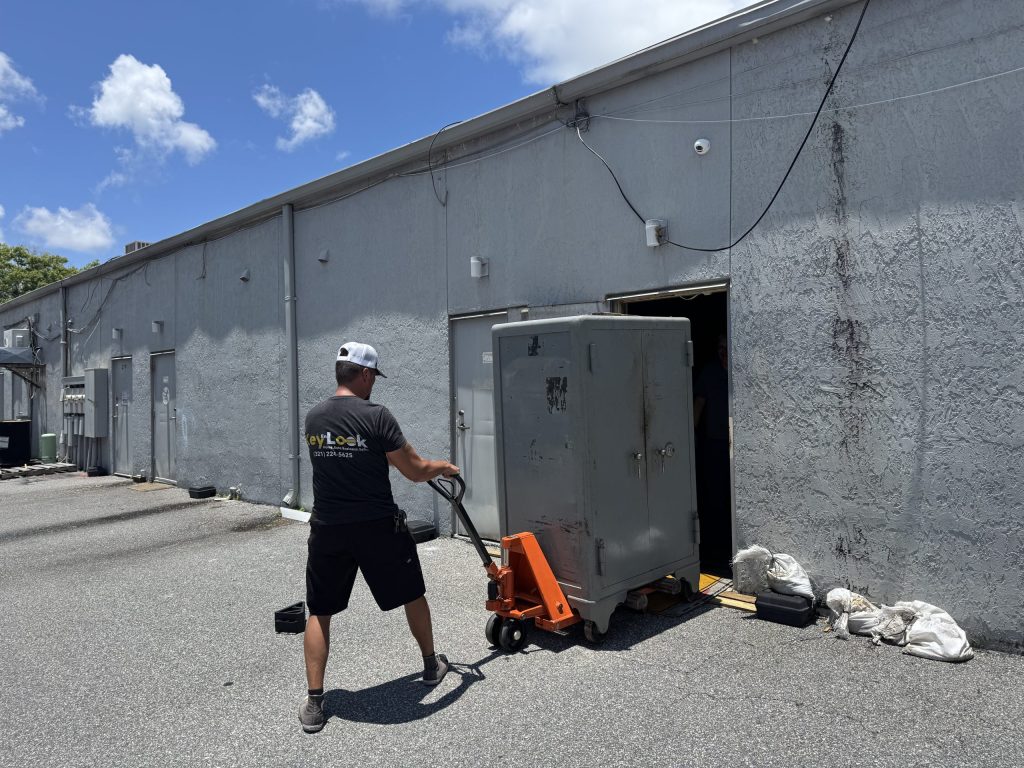
We get it. You’re moving to a new house or rearranging your office and that safe needs to go somewhere else. How hard can it be? You’ve got a strong back and a few friends willing to help. Maybe you’ll rent a dolly from the hardware store.
Stop right there.
Every year people are seriously injured or killed trying to move safes on their own. And even if you survive the attempt, you might end up with a safe that will never open again. Here’s what you need to know before you even think about moving a safe yourself.
Safes Are Heavier Than You Think
That small safe in your closet? It probably weighs 200 to 300 pounds. A medium residential safe runs 400 to 800 pounds. Commercial safes and gun safes regularly weigh 1,000 pounds or more. Some large safes weigh several thousand pounds.
Most people drastically underestimate safe weight because safes are compact. All that weight is concentrated in a small space. When you try to lift or tilt it, the physics work against you in ways you don’t expect.
People Die Moving Safes
This is not an exaggeration. People have been crushed to death by safes falling on them. It happens when someone tries to move a safe down stairs and loses control. It happens when a dolly tips over. It happens when the safe shifts unexpectedly during loading or unloading.
A 500-pound safe falling on your chest will kill you. A 500-pound safe pinning your leg against a wall will crush the bone. These are not freak accidents. They are predictable outcomes when untrained people try to move extremely heavy objects without proper equipment and expertise.
The Damage to Your Property
Even if nobody gets hurt, you’re probably going to damage something. Safes destroy hardwood floors. They punch through stairs. They tear up carpet and crack tile. They gouge walls and destroy door frames.
One wrong move and your safe goes through the floor into the basement. Or through the wall into the next room. We’ve seen safes that fell off trucks and landed in the street. We’ve seen safes that rolled down driveways and crashed into parked cars.
The property damage from a DIY safe move often costs more than hiring professionals would have in the first place.
Glass Relockers Will Lock You Out Forever
Here’s something most people don’t know. Many quality safes have a security feature called a glass relocker. It’s a small glass plate inside the door connected to the locking mechanism. If the glass breaks, the safe goes into permanent lockdown.
Glass relockers are designed to stop thieves from drilling into safes. But they also trigger when a safe is dropped, tipped over too hard, or banged around during transport. The vibration or impact shatters the glass and the relocker fires.
Once a glass relocker activates, your safe will not open. Not with the combination. Not with the key. Not with anything. A locksmith will have to drill into the safe to defeat the relocker, which is expensive and time-consuming. Some safes have multiple relockers that make this process even more difficult.
We’ve had customers call us in tears because they tried to move their safe, it tipped over, and now they can’t access their valuables. Birth certificates. Passports. Jewelry. Firearms. Irreplaceable family heirlooms. All locked away because they wanted to save a few hundred dollars on professional moving.
The Right Way to Move a Safe
Professional safe movers have specialized equipment designed for this exact job. Heavy-duty stair climbing dollies. Hydraulic lifts. Moving straps rated for extreme weight. Trucks with lift gates.
More importantly, they have experience. They know how to assess a safe’s weight and balance. They know how to navigate tight corners and narrow staircases. They know how to secure a safe for transport so it doesn’t shift or fall.
Professional movers also carry insurance. If something goes wrong, their insurance covers the damage. When you move a safe yourself and it crashes through your floor, that’s coming out of your pocket.
What About Small Safes?
Even small safes are risky to move without proper technique. A 150-pound safe doesn’t sound that heavy until you’re trying to carry it down a flight of stairs. Your grip slips, your back gives out, or your helper stumbles, and suddenly that safe is tumbling down with you behind it.
Small safes also have glass relockers. That little fire safe you bought from the office supply store can still lock you out permanently if you handle it too roughly.
Call a Professional
At Key-En-Lock, we’ve been moving safes throughout Brevard County for over 25 years. We have the equipment, the training, and the experience to move your safe safely. We know how to handle safes of all sizes, from small residential fire safes to massive commercial vaults.
We also understand safe mechanisms. We know which safes have glass relockers and how to handle them during transport. We take precautions that most general movers don’t even know about.
Don’t risk your life, your property, or your valuables trying to save money on a safe move. The cost of professional safe moving is nothing compared to a hospital bill, a home repair bill, or losing access to everything locked inside your safe.
Call Key-En-Lock at (321) 224-5625 to schedule your safe move. We’ll give you an honest quote and peace of mind knowing the job will be done right.