Skip to main content
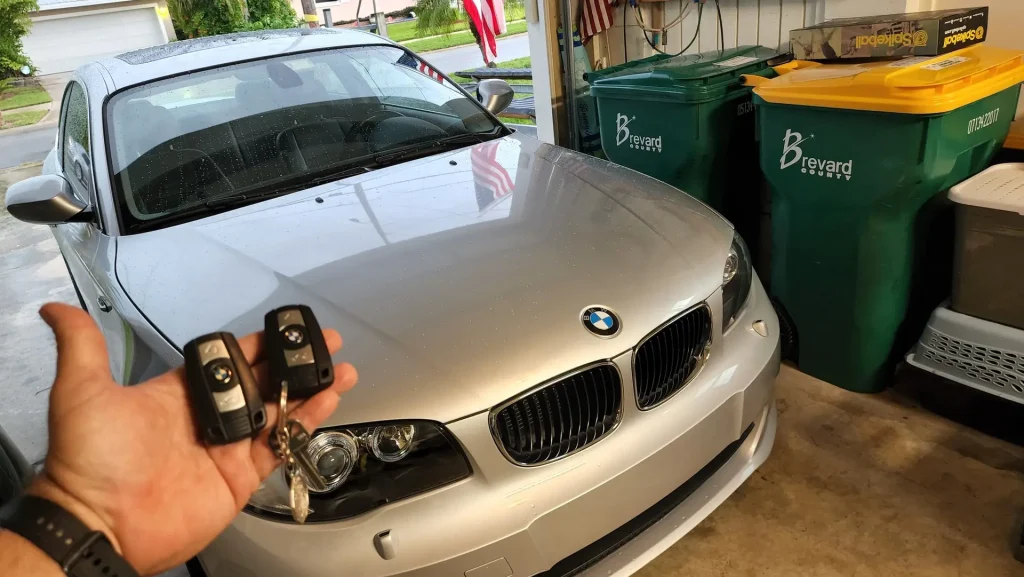
Losing your BMW key at the beach is a uniquely frustrating situation. You’re in flip-flops with sand everywhere, your car is sitting in a hot parking lot, and that sophisticated key fob is somewhere between the waves and your beach towel. BMW keys are among the most expensive and complex to replace, so knowing what to do — and what not to do — can save you hundreds of dollars and hours of waiting.
Why Losing a BMW Key Is a Bigger Deal
BMW key fobs aren’t simple metal keys with a chip. Depending on your model year, you may have:
- BMW Comfort Access key — a proximity fob that communicates wirelessly with the vehicle. The car unlocks as you approach and starts with a push button.
- BMW Display Key — a smart fob with an LCD touchscreen that shows vehicle status, fuel level, and can even be used to park the car remotely on select models.
- Traditional BMW key with remote — older models use a diamond-shaped key fob with integrated key blade and remote lock/unlock buttons.
All BMW keys contain encrypted transponder data that’s paired to your specific vehicle. Unlike some domestic brands, BMW’s security system is particularly complex. Replacement keys require specialized equipment and training.
The Cost Factor
BMW dealer replacement keys typically run $300–$500+ for a standard fob, and $500–$800+ for a Display Key. That’s before the tow truck to get your car to the dealership if you’ve lost your only key. And dealer timeframes? Expect 3–7 business days in many cases, especially if the key needs to be ordered.
Immediate Steps When You Realize the Key Is Gone
1. Retrace Your Steps (Quickly)
Before panic sets in, do a systematic check:
- Your beach bag — check every pocket, under towels, in the cooler
- Your path from the car — walk the exact route you took, scanning the ground
- The beach spot where you were sitting — shake out all towels and blankets, check under chairs
- The water’s edge — if you went in the water, the key may have washed up nearby or sunk in the shallows
- Nearby facilities — check the restroom, rinse station, and lifeguard station lost-and-found
If you were at a Brevard County beach like Paradise Beach, Satellite Beach, or Melbourne Beach, ask the lifeguards if anyone turned in a car key. Beach-goers frequently find and turn in keys.
2. Check if Your BMW Has a Secondary Access Method
BMW Connected Drive app: If you have the BMW Connected app set up on your phone, you may be able to unlock your car remotely. Some models also support remote engine start through the app. Check the app before calling anyone.
Spare key at home: If someone can bring your spare key, this is the fastest and cheapest solution. Call a friend or family member who has access to your spare.
BMW Assist: If your vehicle has an active BMW Assist subscription (or the newer BMW Digital Services), call BMW Roadside Assistance. They may be able to help with a remote unlock.
3. Don’t Try to Break Into Your BMW
BMW vehicles have sophisticated alarm systems. Attempting to force entry will trigger the alarm, potentially damage the vehicle, and won’t help you start the car anyway — the engine immobilizer requires the transponder signal from the key.
4. Call a Mobile Automotive Locksmith
A qualified automotive locksmith with BMW experience can come to the beach parking lot and:
- Open the vehicle without damage using non-destructive entry tools
- Program a new key on-site using the vehicle’s OBD-II diagnostic port
- Cut the emergency key blade if your fob type includes one
- Delete the lost key from the vehicle’s system so it can’t be used if found by someone else
This last point is important. If someone finds your lost key near your typical beach spot, and your car is in the same parking lot regularly, a deleted key provides no access.
BMW Key and Water: What Happens
BMW key fobs are not waterproof. Brief exposure to splashes or rain is usually fine, but submersion in ocean water is a different story:
- Salt water corrodes internal circuits rapidly — within hours, not days
- The battery contacts are particularly vulnerable
- The transponder chip may survive brief submersion but isn’t guaranteed
- Display Keys are especially sensitive due to the LCD screen and additional electronics
If you find your BMW key after it’s been in salt water:
- Don’t press any buttons — this can short-circuit wet electronics
- Remove the battery immediately (the emergency key blade pries open the fob)
- Rinse with fresh water — this sounds counterintuitive, but it removes corrosive salt
- Dry thoroughly — place in uncooked rice or use a desiccant packet for 24–48 hours
- Install a fresh battery and test
Even with these steps, a salt-water-soaked key may need replacement. Have a locksmith test it before assuming it’s dead.
Preventing Beach Key Loss
Smart strategies for keeping your BMW key safe at the beach:
- Leave the fob in your car. If you have Comfort Access, lock the fob inside the vehicle before heading to the beach. You can lock the doors using the button on the door handle or the physical key blade. This keeps the fob safe, dry, and away from sand.
- Use a waterproof key pouch. Dry bags designed for phones and keys are inexpensive and let you keep the key on your person while swimming.
- Attach a floating keychain. Foam keychains designed for boaters will keep your key visible if dropped in shallow water.
- Designate a key person. If you’re with a group, have one person who stays with the belongings hold the key.
- Use a combination lockbox on your vehicle. Magnetic or hitch-mounted lockboxes let you secure a spare key to the car’s exterior.
BMW Key Replacement in Brevard County
Key-En-Lock provides mobile BMW key services throughout the Brevard County beachside communities including Melbourne Beach, Satellite Beach, Indian Harbour Beach, Cocoa Beach, and Cape Canaveral. Whether your key was lost in the sand, damaged by salt water, or simply stopped working, we come to you with the equipment needed to get you back on the road. Call (321) 224-5625 for BMW key replacement and programming.
Serving Brevard County
Need a local locksmith? We serve nearby areas including:
- locksmith in Locksmith Indian Harbour Beach
- emergency locksmith Locksmith Melbourne
- Locksmith Patrick Space Force Base locksmith
- Locksmith Melbourne Beach locksmith
- emergency locksmith Locksmith West Melbourne
- locksmith in Locksmith Cape Canaveral
See all locations: Service Areas or call (321) 224-5625.