Skip to main content
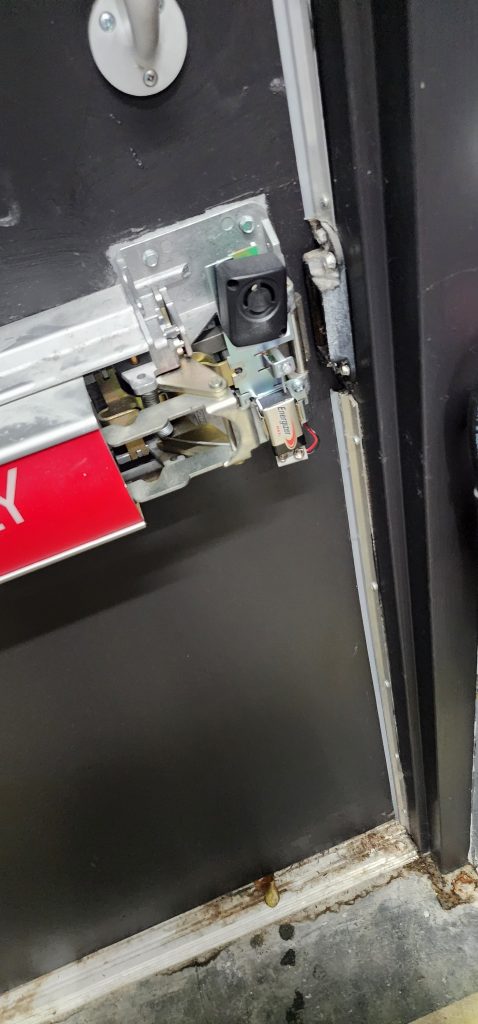
That alarmed exit bar on your back door or emergency exit is one of those things nobody thinks about until it fails. Then it’s a problem — either the alarm won’t stop screaming, the bar won’t push open, or the door swings freely without triggering anything at all. Any of those situations is a security and safety liability for your business.
Detex makes some of the most widely installed alarm exit devices in commercial buildings across the country. You’ll find them on emergency exits in retail stores, restaurants, warehouses, churches, schools, and office buildings throughout Brevard County. They’re built to last, but they’re not maintenance-free. A little preventive care keeps them working reliably for years. Neglect them, and you’ll end up with a false alarm problem, a fire code violation, or a security gap.
Here’s how to maintain your Detex alarm exit bar so it works every time — and how to recognize when it’s time to call a professional.
What a Detex Alarm Exit Bar Actually Does
A Detex alarm exit bar — also called a panic bar, crash bar, or exit alarm — serves a dual purpose. It allows people to exit through a door quickly in an emergency by pushing the horizontal bar, while simultaneously sounding a loud alarm (typically 95–100 decibels) to alert staff that the door has been opened.
This matters because emergency exits are required by fire code, but those same exits are a security vulnerability. Without an alarm, anyone can slip out (or in) through an emergency door undetected. The Detex alarm solves this by making it impossible to open the door quietly.
Detex offers several models, but the most common ones you’ll see in commercial buildings are:
Detex ECL-230D — The standard battery-powered alarmed exit device. This is the model installed on the majority of commercial emergency exits. It runs on a 9-volt battery and sounds a local alarm when the bar is depressed.
Detex EAX-500 — An exit alarm designed for doors that already have separate exit hardware. Rather than replacing the existing panic bar, the EAX-500 mounts above the door and monitors whether the bar is pushed.
Detex V40 Series — A value-line alarmed exit device for lighter commercial applications. Same basic function as the ECL-230D but at a lower price point.
Regardless of the model, the maintenance principles are the same.
Monthly Maintenance Checklist
These are the things you or your facility manager should check once a month. None of them require tools or special training — just 5 minutes per door.
Test the alarm. Push the bar and confirm the alarm sounds immediately and loudly. If the alarm is weak, delayed, or silent, the battery is dying or there’s an internal wiring issue. Don’t wait for it to fail completely — a silent alarm exit bar is a security liability and a code violation.
Check the battery. For battery-powered models like the ECL-230D, the 9-volt battery is the most common failure point. Detex recommends replacing the battery every 12 months regardless of whether it still tests good. Batteries degrade faster in Florida’s heat, so every 6–9 months is a safer interval for Brevard County businesses. When you test the alarm, listen for a strong, full-volume sound. A weaker-than-usual alarm is the first sign the battery is running low.
Inspect the door alignment. Push the bar and watch how the door opens. It should swing freely and close completely on its own when released. If the door sticks, drags on the floor, doesn’t latch properly, or doesn’t close all the way, the alarm may not reset correctly — and the door may not be secure when closed.
Check the latch bolt. When the door is closed and the bar is in the resting position, the latch bolt should be fully extended into the door frame strike. If there’s visible play or the latch doesn’t fully engage, the door isn’t secure. This can happen when the strike plate shifts, the frame settles, or the latch mechanism wears.
Look for physical damage. Check the bar, end caps, mounting screws, and the alarm housing for cracks, loose screws, or signs of tampering. Exit bars take a beating — people lean on them, hang things from them, kick them, and occasionally hit them with carts and equipment.
Quarterly Maintenance
Every three months, do a slightly deeper inspection:
Clean the bar and mechanism. Wipe down the entire bar with a damp cloth. Dust, grease, and grime accumulate on the push pad and inside the end caps. For the latch mechanism, a light shot of dry graphite lubricant keeps things moving smoothly. Avoid WD-40 or oil-based lubricants — they attract dust and eventually gum up the mechanism.
Test the reset function. After triggering the alarm, close the door and confirm the alarm silences and the bar resets to the armed position. The reset should happen automatically when the door closes completely. If you have to manually reset the alarm or jiggle the bar to get it to re-arm, the mechanism needs adjustment.
Inspect the door closer. Most alarm exit doors have a commercial door closer mounted at the top. The closer controls how fast the door swings open and how firmly it pulls shut. If the closer is leaking hydraulic fluid (look for oily residue on the arm or body), the door won’t close properly, which means the alarm won’t reset and the latch won’t engage. Door closer adjustment and replacement is a common service call that prevents bigger problems.
Check the hinges. Worn or loose hinges cause the door to sag, which throws off the alignment between the latch bolt and the strike plate. Tighten hinge screws and check for worn hinge pins. In high-traffic exits, continuous (piano) hinges are more durable than standard butt hinges.
Annual Professional Service
Once a year, have a qualified locksmith or door hardware technician perform a full service:
Internal mechanism inspection. The bar’s internal spring, latch assembly, and alarm trigger mechanism should be inspected for wear. Springs weaken over time, and the trigger switch that activates the alarm can develop contact issues.
Strike plate and frame alignment. A professional can check and adjust the strike plate to ensure the latch bolt engages fully. Frame settling, especially in older Brevard County commercial buildings built on Florida’s sandy soil, can shift the door frame enough to cause latch problems.
Alarm decibel test. The alarm should produce at least 95 dB at the door. A professional can measure this and determine whether the alarm horn, battery contacts, or wiring need attention.
Fire code compliance check. Exit devices must meet specific building and fire code requirements. A professional inspection confirms that the bar releases properly, the door opens to the required width, the alarm functions correctly, and signage is in place. This is especially important for businesses subject to fire marshal inspections.
Common Problems and What They Mean
Alarm sounds weak or intermittent. In 90% of cases, this is a battery issue. Replace the 9-volt battery first. If the problem persists with a fresh battery, the battery contacts inside the housing may be corroded (common in Florida’s humidity) or the alarm horn itself is failing.
Alarm doesn’t sound at all. If a fresh battery doesn’t fix it, the alarm trigger switch may have failed. This is the internal switch that detects when the bar is pushed. It’s a mechanical part that wears out over thousands of cycles. A locksmith can replace the switch or the entire alarm assembly.
Bar is stiff or hard to push. Internal springs are fatigued, or the latch mechanism is dry or corroded. A stiff exit bar is a fire code violation — in an emergency, occupants need to be able to open the door with minimal force (typically 15 pounds or less per code). Clean and lubricate the mechanism, and replace springs if needed.
Door doesn’t latch when closed. The latch bolt isn’t reaching the strike plate. Check door alignment, hinge condition, and strike plate position. In many cases, the strike plate just needs to be repositioned a fraction of an inch.
Alarm keeps sounding after door closes. The reset mechanism isn’t engaging. This usually means the door isn’t closing completely (check the closer), the latch bolt isn’t fully retracting and extending (lubrication issue), or the alarm trigger switch is stuck.
False alarms. The alarm sounds randomly without anyone touching the door. This can be caused by wind pressure on the door, a failing trigger switch, or loose wiring inside the bar. Identify the pattern — if it happens on windy days, the door may need better weatherstripping or a threshold adjustment to reduce pressure changes.
Florida-Specific Concerns
Brevard County’s climate creates specific challenges for exit hardware:
Salt air corrosion. Businesses near the coast — Cocoa Beach, Cape Canaveral, Satellite Beach, Melbourne Beach — see accelerated corrosion on door hardware. The latch bolt, strike plate, and exposed metal components develop surface rust that impedes smooth operation. Regular cleaning and a light coat of corrosion inhibitor on metal parts helps.
Heat expansion. Commercial metal doors expand in Florida’s heat, which can change the gap between the door and frame. A door that latches perfectly in January may drag or bind in August. This is why alignment checks in summer are important.
Humidity and battery life. Florida’s humidity reduces battery life in electronic and battery-powered devices. The 12-month battery replacement interval that Detex recommends assumes a moderate climate. In Brevard County, plan on replacing batteries every 6–9 months.
Hurricane season preparation. Before hurricane season, test all exit devices and stock replacement batteries. After a storm, inspect door frames for shifting or damage that could affect exit bar operation. Wind-driven debris can bend door frames enough to create latch problems.
When to Replace vs. Repair
Detex exit bars are designed for long service life — typically 10–20 years in normal commercial use. But they don’t last forever.
Repair when the issue is a worn part (spring, latch, switch), a battery or contact problem, or a door alignment issue. These are routine service items that a locksmith can handle quickly.
Replace when the bar shows significant corrosion, the housing is cracked, the mounting points are compromised, the mechanism is worn beyond adjustment, or the model is discontinued and parts are no longer available. Also consider replacement if your building’s code requirements have changed — newer models may include features like delayed egress, key bypass, or integration with fire alarm systems that older models lack.
Detex Exit Bar Service in Brevard County
Key-En-Lock provides professional commercial locksmith services including Detex alarm exit bar installation, maintenance, and repair throughout Melbourne, Palm Bay, Cocoa Beach, Titusville, and all of Brevard County. We work with property managers, business owners, and facility teams to keep exit hardware compliant and functioning properly.
Whether you need a routine battery replacement, a full annual inspection, or an emergency repair on a bar that’s stopped working, call (321) 224-5625. We’ll get your exit hardware back in order.
Serving Brevard County
Need a local locksmith? We serve nearby areas including:
- Locksmith Indialantic FL locksmith
- locksmith in Locksmith Cocoa Beach
- Locksmith Malabar locksmith
- locksmith in Locksmith Melbourne Beach
- locksmith in Locksmith Cocoa
- Locksmith Cape Canaveral FL locksmith
See all locations: Service Areas or call (321) 224-5625.