Skip to main content
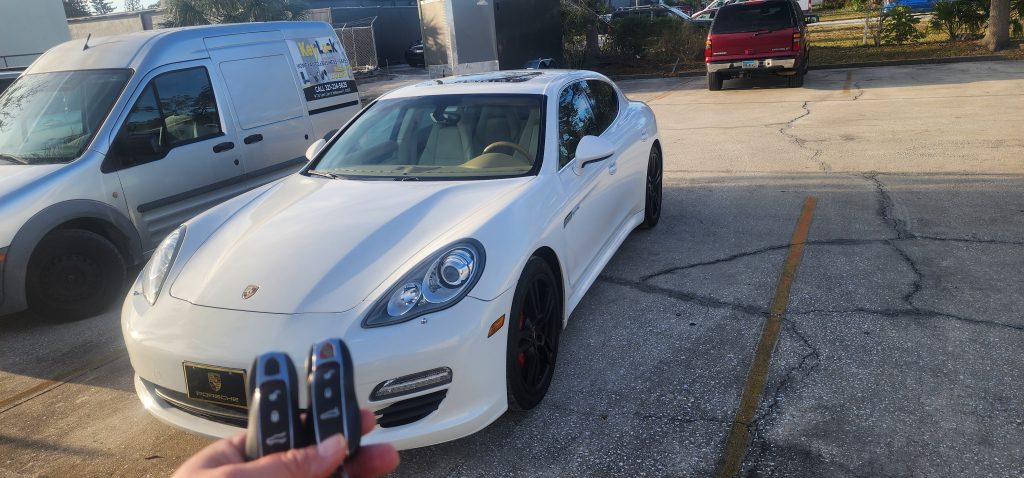
Your key fob stopped working. You press the lock button and nothing happens. Maybe the range got shorter over the last few weeks — you had to walk closer and closer to the car before it would respond. Or maybe it just died completely one morning in your driveway in Viera.
Key fob programming is one of the most common automotive locksmith services, but most people don’t understand what’s actually involved — or why the cost varies so much between vehicles.
What Key Fob Programming Actually Means
Key fob programming is the process of pairing a new or replacement remote to your vehicle’s onboard computer. Every modern vehicle has a receiver that recognizes specific fob signals. When you press the lock button, the fob transmits an encrypted code. If the vehicle’s receiver recognizes that code, it executes the command.
Programming a new fob means teaching the vehicle to recognize a new encrypted signal. This isn’t the same as replacing a battery — it’s a software procedure that communicates directly with the vehicle’s electronic control module (ECM).
There are three common scenarios where fob programming is needed:
Battery replacement gone wrong. Some vehicles lose their fob pairing when the battery is removed. You pop in a new CR2032, but the fob still doesn’t work because it needs to be re-paired.
Replacement fob. You bought a replacement fob online or from a parts store and need it programmed to your vehicle.
Lost fob replacement. All fobs are lost or stolen, and you need a completely new one programmed from scratch. This is the most involved process because the vehicle has no existing fob to reference.
Why Some Vehicles Are More Complex
Not all key fob programming is equal. The complexity depends on your vehicle’s security system generation.
Basic remote-only fobs (common on vehicles from 2000–2010) control locks and sometimes the trunk, but don’t affect the ignition. Many of these can be programmed with a simple onboard procedure — a sequence of turning the key and pressing buttons. These are the cheapest to program.
Transponder-integrated fobs combine the remote lock/unlock function with the engine immobilizer chip. Programming these requires specialized equipment that can communicate with the vehicle’s immobilizer system. Most vehicles from 2010 onward use this type.
Proximity smart keys are the push-button start fobs that you never take out of your pocket. These use rolling encryption codes and require the most advanced programming equipment. Brands like Toyota, Honda, Ford, and Hyundai each have their own proprietary systems.
Luxury and European vehicles — BMW, Mercedes, Audi, Volkswagen — often have the most complex systems with additional security layers. Some require online authentication with the manufacturer’s server during programming.
Dealership vs. Locksmith for Fob Programming
The dealership will program your fob, but the experience typically looks like this: schedule an appointment (3–7 day wait), tow or drive the vehicle there, wait 1–2 hours while they do 15 minutes of actual work, and pay $150–$400+ for the programming alone — on top of the fob cost.
A mobile automotive locksmith brings the programming equipment to your location. The actual programming process takes 10–30 minutes. You don’t need a tow, you don’t need to take time off work, and the cost is typically 30–50% less than the dealership.
The key difference: locksmiths invest in aftermarket programming tools that work across multiple makes and models. Dealerships use manufacturer-specific tools that only work on their brand. Both get the job done — the locksmith just does it at your location for less money.
What Affects the Cost
Vehicle make and model is the primary cost driver. A basic Ford fob programming might run $75–$125. A BMW or Mercedes smart key can be $250–$400.
Number of fobs matters because most vehicles need to be put into programming mode, which erases all existing fob pairings. If you’re programming one new fob, the locksmith also needs to re-program your existing fob at the same time. Programming two fobs together is only slightly more expensive than programming one.
All keys lost situations cost more because the locksmith needs to access the vehicle’s security system at a deeper level, sometimes requiring PIN codes or security bypass procedures specific to your vehicle.
OEM vs. aftermarket fob affects the hardware cost. OEM fobs from the manufacturer cost more but are guaranteed compatible. Quality aftermarket fobs cost less and work fine for most applications, though some luxury vehicles require OEM parts.
Tips for Fob Owners
Replace the battery before it dies completely. Most fobs give warning signs — reduced range, intermittent operation, needing multiple button presses. A $3 battery swap now prevents a potential programming issue later.
Know your fob type. Check your owner’s manual or look up your vehicle online to understand what type of fob system you have. This helps you get accurate quotes when you call.
Don’t buy the cheapest fob on Amazon. Rock-bottom prices usually mean inferior chip quality. The fob might program initially but fail within a few months. Buy from a reputable source or let your locksmith supply it — the slight markup includes a warranty.
Keep your spare fob’s battery fresh too. A spare fob sitting in a drawer for three years probably has a dead battery. Check it periodically.
Key Fob Programming in Brevard County
Key-En-Lock provides mobile key fob programming for all major makes and models throughout Brevard County. We carry programming equipment for domestic, Asian, and European vehicles and stock the most common fob types for same-day service.
Whether you need a simple re-pair after a battery change or a complete replacement fob programmed from scratch, we come to your location and handle everything on-site. Call (321) 224-5625 for a quote specific to your vehicle.
Serving Brevard County
Need a local locksmith? We serve nearby areas including:
- Locksmith Melbourne FL locksmith
- Locksmith Malabar FL locksmith
- locksmith in Locksmith Melbourne Village
- Locksmith West Melbourne FL locksmith
- Locksmith Merritt Island FL locksmith
- emergency locksmith Locksmith Cocoa
See all locations: Service Areas or call (321) 224-5625.