Skip to main content
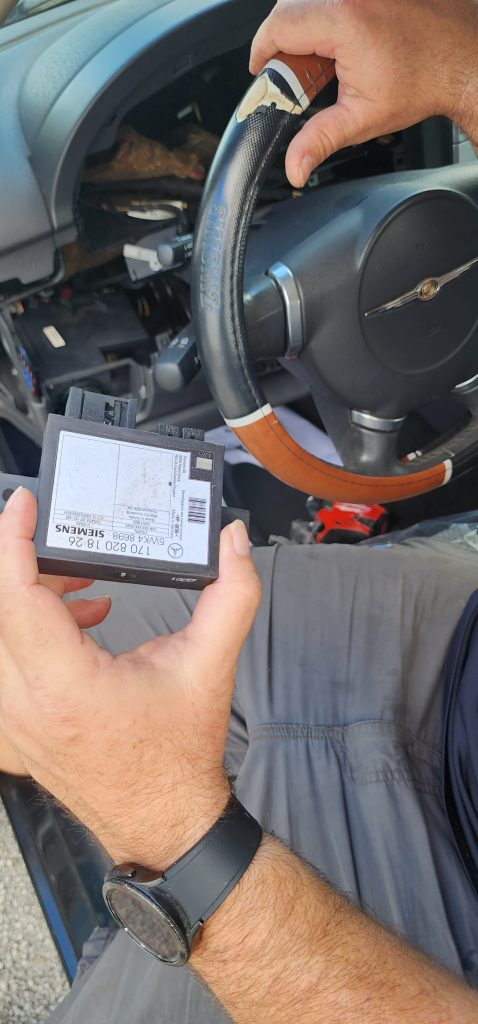
Transponder keys look like ordinary car keys, but they’re anything but ordinary. That thick plastic head on your key isn’t just a comfortable grip — it houses a tiny microchip that communicates with your vehicle’s engine immobilizer every time you turn the ignition.
If the chip isn’t there, or if it’s transmitting the wrong code, your engine won’t start. Period. The key will turn, the dashboard lights might come on, but the starter won’t engage. This is the entire point of transponder technology — it prevents anyone from starting your car with a copied metal key.
How Transponder Keys Work
Every transponder key contains a small RFID (Radio Frequency Identification) chip embedded in the key head. When you insert the key into the ignition (or bring a smart key near the push-button start), the vehicle’s antenna ring sends an electromagnetic signal that powers the chip. The chip responds with a unique encrypted code.
The vehicle’s immobilizer control unit receives this code and checks it against the codes stored in its memory. If there’s a match, the immobilizer allows the engine to start. If there’s no match — or no signal at all — the immobilizer blocks the fuel injection and ignition systems.
This all happens in milliseconds, every single time you start your car. You never notice it unless something goes wrong.
Types of Transponder Systems
Fixed code transponders transmit the same code every time. These were used in earlier transponder systems (mid-1990s to early 2000s). They’re less secure by modern standards but still effective against basic key copying.
Rolling code transponders change their code with each use, synchronized with the vehicle’s computer. Even if someone intercepts the signal, the code is already expired by the time they try to use it. Most vehicles from 2005 onward use some version of rolling code technology.
Encrypted transponder systems use advanced encryption algorithms (like AES-128) that are virtually impossible to crack. These are found in newer vehicles and represent the current standard in automotive security.
When You Need a Transponder Key
Your only key is lost. This is the most common reason people call. Without any working key, the locksmith needs to access the vehicle’s immobilizer system, generate a new transponder code, and program a fresh key.
Your key turns but the car won’t start. If the mechanical part of the key works fine but the engine won’t crank, the transponder chip may have failed. Chips can crack internally from impact damage (dropping keys on hard surfaces) or simply wear out over time.
You want a spare key. If you’re down to one transponder key, getting a spare made is one of the best investments you can make. A planned spare costs significantly less than an emergency replacement.
You bought a used car with one key. Used cars frequently come with just one key. The previous owner lost the spare, or the dealership kept it. Getting a second key made immediately protects you from a much more expensive all-keys-lost scenario later.
The Difference Between Cutting and Programming
A transponder key requires two separate steps to work:
Cutting is the mechanical part — shaping the metal blade to fit your specific lock cylinders. This requires either the original key (for duplication) or the vehicle’s key code (which can be retrieved from the VIN or lock decode).
Programming is the electronic part — pairing the transponder chip with your vehicle’s immobilizer. This is the step that requires specialized diagnostic equipment. Without programming, a perfectly cut key will fit the ignition and turn — but the engine won’t start.
Both steps are essential. A key that’s cut but not programmed is useless for starting the vehicle. A chip that’s programmed but in an uncut key won’t even fit the ignition.
Cost Factors for Transponder Keys
The price range for transponder keys varies widely — from about $75 to $300+ — depending on several factors:
Vehicle age and make is the biggest variable. A transponder key for a 2008 Toyota Camry is straightforward and affordable. A transponder key for a 2022 Audi Q5 involves a more complex security system and costs proportionally more.
Key type matters. A basic transponder key (metal blade with chip) costs less than a transponder key integrated into a remote fob, which costs less than a proximity smart key.
All keys lost vs. spare key makes a significant difference. Programming a spare when you have a working key is simpler — the existing key helps the system accept the new one. When all keys are lost, the locksmith needs deeper access to the immobilizer, which takes more time and specialized procedures.
Why a Locksmith Beats the Dealership
For transponder key services, a mobile locksmith offers clear advantages:
Speed. A locksmith arrives at your location in 20–30 minutes and completes the job in 30–60 minutes. A dealership requires scheduling, towing, and typically a multi-day wait for key ordering.
Convenience. The locksmith comes to you — your driveway, office parking lot, or roadside. No towing, no ride arrangements, no taking time off work.
Cost. Locksmiths invest in multi-brand programming equipment rather than manufacturer-specific tools. This competition and efficiency translates to lower prices — typically 30–50% less than dealership rates for the same result.
Same-day service. Most locksmiths stock common transponder key blanks and can complete the entire job — cut, program, and test — in a single visit.
Transponder Key Services in Brevard County
Key-En-Lock provides complete transponder key services throughout Melbourne, Palm Bay, Cocoa Beach, Viera, Merritt Island, and all of Brevard County. We carry transponder blanks for most major manufacturers and our mobile units are equipped with the latest programming technology.
Whether you need a spare key, a replacement for a lost key, or diagnostics on a transponder that’s stopped working, we handle everything on-site. Call (321) 224-5625 for a free quote.
Serving Brevard County
Need a local locksmith? We serve nearby areas including:
- Locksmith Patrick Space Force Base locksmith
- emergency locksmith Locksmith Melbourne
- emergency locksmith Locksmith Malabar
- emergency locksmith Locksmith West Melbourne
- Locksmith Melbourne Beach locksmith
- locksmith in Locksmith Titusville
See all locations: Service Areas or call (321) 224-5625.