Skip to main content
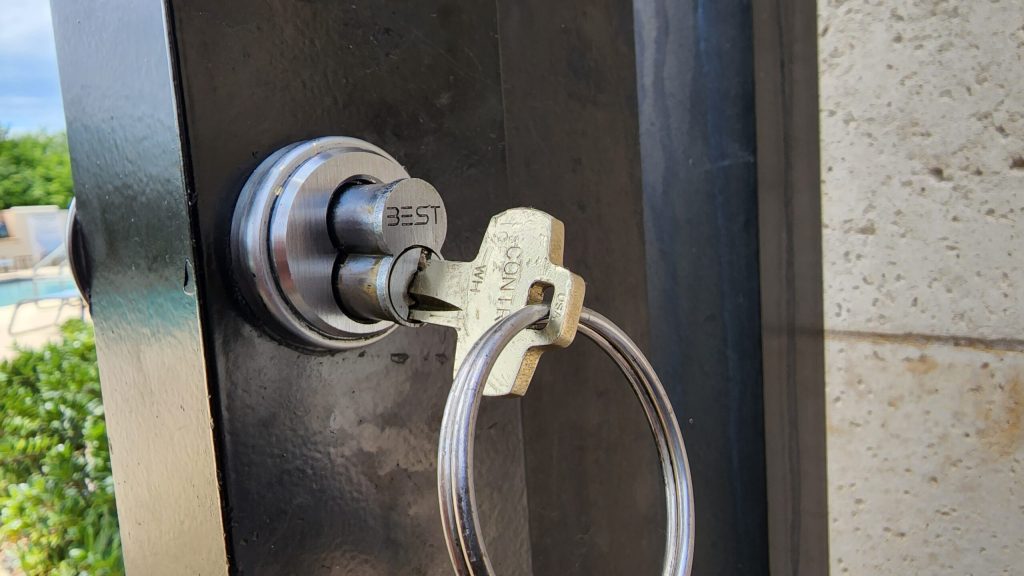
Cold mornings can throw off even the easiest routine. Doors stick, keys feel brittle, and just one rushed move can lock you out before the day even begins. While Brevard County doesn’t see the kind of freezing temperatures that northern states deal with, our winter mornings can still dip into the 40s and 50s — and that’s enough to cause lock problems that catch homeowners off guard.
Here’s why cold mornings lead to more lockouts and what you can do to avoid becoming one of our early morning emergency calls.
Why Locks Misbehave in Cold Weather
Even in Florida, the temperature difference between a cool overnight low and the afternoon high can be 30 degrees or more. That swing affects your locks in ways you might not expect.
Metal contracts in the cold. Your lock cylinder, the pins inside it, the bolt, and the strike plate are all metal. When temperatures drop overnight, each of these components contracts slightly. For a lock that’s already borderline — maybe it’s been a little stiff lately or the key requires a bit of jiggling — that contraction can be the difference between the key turning smoothly and not turning at all.
Lubricant thickens. If your lock has any lubrication inside (and it should), cold temperatures cause it to thicken and become less effective. Graphite-based lubricants handle cold better than oil-based ones, which is why we always recommend dry graphite for Florida locks. Oil-based lubricants can actually attract dust and grit over time, making the problem worse.
Moisture creates problems. Florida’s humidity means there’s always moisture in the air. On cold mornings, that moisture can condense inside the lock mechanism. In rare cases during our coldest snaps, this can even create a thin film of frost inside the cylinder. You try to insert your key and it just won’t go all the way in, or it goes in but won’t turn.
The Rushed Morning Factor
Cold morning lockouts aren’t always about the lock malfunctioning. Half the time, it’s about human behavior when we’re cold and in a hurry.
You step outside to warm up the car. The door closes behind you. Your keys are on the kitchen counter. Now you’re standing in the driveway at 6:30 AM in a t-shirt because Florida didn’t tell you it was going to be 48 degrees this morning.
Or you grab the wrong set of keys. Or you try to force a sticky lock and the key bends or snaps off inside the cylinder. These are all scenarios we respond to regularly during cold snaps, and they almost always happen between 6 and 8 AM when people are rushing out the door.
Cold Weather Lock Maintenance Tips
A few minutes of prevention can save you from a cold morning standing in your driveway waiting for a locksmith.
Lubricate your locks before cold season. In late November or early December, apply a dry graphite lubricant (not WD-40) to all your exterior door locks. Insert the key and work it in and out several times to distribute the lubricant throughout the cylinder. This takes about 30 seconds per lock and can prevent most cold-weather sticking.
Test your locks regularly. Once a month, walk around and test every exterior door lock with your key. If any of them feel stiff, sticky, or require excessive jiggling, that’s a warning sign. Address it now while it’s convenient, not at 6 AM when it’s 50 degrees and you’re late for work.
Check your door alignment. As homes settle over time (especially in Florida’s sandy soil), door frames can shift slightly. A door that was perfectly aligned when installed might now be rubbing against the frame or putting lateral pressure on the lock bolt. In warm weather, thermal expansion compensates for this, but cold contraction reveals the misalignment. If your door requires extra force to close or lock, the frame or strike plate may need adjustment.
Don’t force a sticky key. This is the number one cause of broken keys in lock cylinders. If the key doesn’t turn smoothly, don’t muscle it. Apply lubricant, try gentle wiggling while turning, or gently rock the key while applying turning pressure. If it still won’t turn, call a locksmith. A service call is much cheaper than extracting a broken key and cutting a new one.
Have a backup plan. Keep a spare key somewhere accessible — with a trusted neighbor, in a secure lockbox, or in your car’s magnetic key box. Smart locks with keypad backup are another excellent option since you can always punch in a code even if your physical key isn’t cooperating.
What to Do If You’re Locked Out on a Cold Morning
If prevention didn’t work and you’re standing outside at dawn, here’s what to do:
Don’t try to break in. You’ll likely cause more damage than a locksmith would charge to let you in properly. Broken windows, damaged door frames, and bent locks are expensive to fix.
Check all entry points first. Before calling anyone, try every door and accessible window. People forget that they left the sliding glass door unlocked or that the garage side door uses a different key that’s on their keyring.
Call a mobile locksmith. Key-En-Lock responds to emergency lockouts 24/7 across Brevard County. We carry the tools to handle everything from simple doorknob locks to high-security deadbolts, and we can usually have you back inside in under 30 minutes.
Stay warm. If you’re locked out and it’s cold, sit in your car with the heater running (if you have your car key), go to a neighbor’s house, or find a nearby business that’s open. Don’t stand outside in the cold for 30 minutes — hypothermia risk is real even at Florida’s mild cold temperatures, especially if you’re not dressed for it.
Smart Lock Solutions That Eliminate Cold Morning Lockouts
If cold morning lockouts have happened to you more than once, it might be time to consider a keyless entry option. Smart locks like Lockly, Schlage Encode, or Kwikset Halo let you unlock your door with a code, your phone, or even your fingerprint — no physical key needed.
The key advantage (pun intended) is that these systems are immune to the cold weather factors that affect traditional locks. There’s no cylinder to contract, no pins to stick, and no key to forget on the counter. You walk up to your door, punch in your code, and you’re inside.
We install all major smart lock brands and can help you choose the right one for your home and budget.
Tired of cold morning lockout scares? Call Key-En-Lock at (321) 224-5625 to schedule a lock maintenance visit or smart lock installation.