Skip to main content

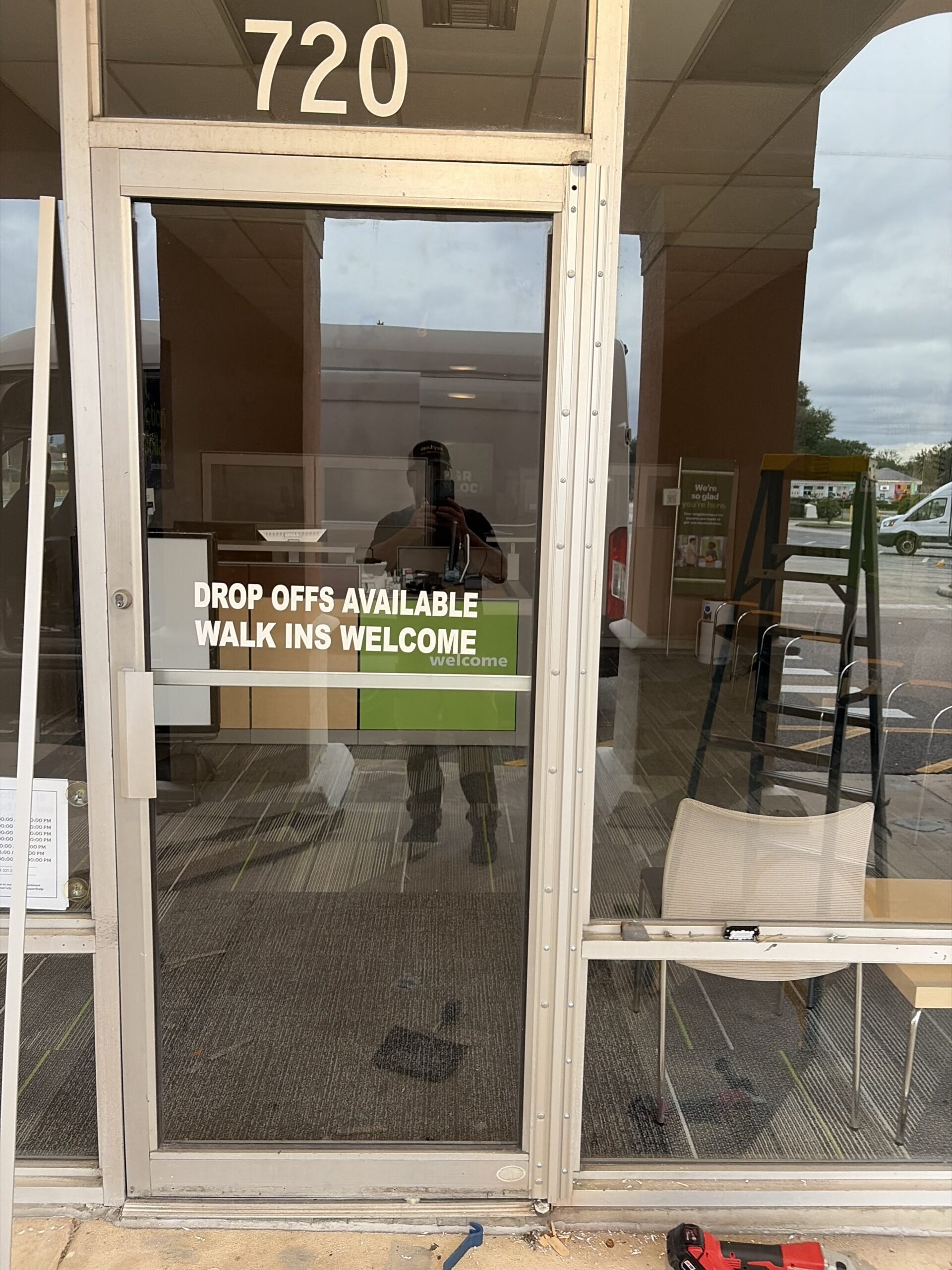
If you have a commercial door running on pivot hinges, you already know what eventually happens. The pivot wears, the door starts to sag, alignment goes off, the latch stops catching cleanly, and before long you’re dealing with a door that either won’t stay closed or won’t open smoothly. It’s a predictable failure cycle — and there’s a better solution that eliminates it entirely.
When Key-En-Lock replaces pivot hinges, we replace them with Roton continuous hinges. Here’s why we use Roton specifically, and why it’s the last hinge replacement that door will ever need.
Is Your Door Dragging on the Threshold or Not Closing Properly?
If your door is dragging on the threshold, catching on the frame, or failing to close and latch consistently — the hinge is almost certainly the cause. These are the classic symptoms of pivot hinge wear:
- Door drags on the threshold — The pivot has worn enough that the door has dropped. Even a fraction of an inch of sag causes the bottom of the door to scrape across the threshold on every operation.
- Door won’t close fully — The door is no longer hanging on the same plane it was installed on. It contacts the frame or stop before fully closing, leaving a gap at the latch.
- Latch or deadbolt won’t engage — Once the door sags, the latch bolt no longer lines up with the strike plate. You feel it when you have to lift the handle or push the door into position to get the latch to catch.
- Door swings open or closed on its own — A door that drifts open or closed on its own has lost its neutral hang position due to pivot wear. The door is no longer balanced on its pivot axis.
If any of these describe your door, it’s time to replace the hinge — and when you’re replacing it, Roton is the way to go.
What Is a Continuous Hinge?
A continuous hinge — also called a piano hinge — runs the full length of the door rather than sitting at two or three discrete points like a standard butt hinge or pivot. The load of the door is distributed evenly along the entire hinge length rather than concentrated at specific stress points. This fundamentally changes how the door wears over time.
With a pivot hinge, all the weight and operating stress of the door passes through two pivot points — one at the top and one at the bottom. Over thousands of cycles those pivot points wear, the tolerances open up, and the door begins to sag and drift. With a continuous hinge, that same load is spread across hundreds of interlocking knuckles running from top to bottom. There is no single point of failure because there is no single point carrying the full load.
Why Roton Specifically
Not all continuous hinges are equal. Roton is the commercial-grade continuous hinge we specify and install because of one fact that stands above everything else in its product data:
Roton continuous hinges are tested to 50 million open and close cycles without failure.
50 million cycles. And here’s the part that puts that number in perspective: the test was stopped at 50 million — not because the hinge failed, but because 50 million cycles exceeds the realistic lifespan of the door itself. There was no point continuing the test because the hinge had already outlasted any reasonable expectation of the door’s service life. The hinge will outlive the door it’s mounted on.
To put 50 million cycles in context — a high-traffic commercial door opening and closing 500 times per day, every single day, would take over 270 years to reach 50 million cycles. A typical commercial door seeing 100 cycles per day would take over 1,300 years. The hinge will not wear out before the door does. It simply will not.
Is the Extra Cost Worth It?
Roton continuous hinges run approximately $200 to $300 more than a standard pivot hinge installation. In our experience that extra cost is absolutely worth it — and here’s why.
A pivot hinge that fails costs you a service call to diagnose the problem, the cost of the replacement pivot hardware, and the labor to install it. If you’ve already replaced the pivots on a door once, you know the drill. With a Roton continuous hinge, you make that investment once and the hinge is done for the life of the door — no callbacks, no repeat hardware costs, no alignment problems developing over time.
For a commercial property, the math is straightforward. One Roton installation at $200–$300 more than a pivot replacement versus multiple pivot replacements and service calls over the door’s lifetime. The Roton pays for itself on the first avoided callback. And that’s before accounting for the operational problems a failing pivot creates — doors dragging on thresholds, latches not engaging, security compromised because the door won’t fully close.
When a customer asks us whether they should go with a pivot replacement or a Roton, our answer is always the same: spend the extra $200 to $300 and never think about this door’s hinge again.
Why Pivot Hinges Fail
Pivot hinges are a common choice on commercial and institutional doors because they allow the door to swing clear of the frame and are relatively straightforward to install. But they have a fundamental mechanical limitation — all the door’s weight and operating stress passes through two small pivot points.
Over time, several things happen:
- Pivot wear — The pivot pin and its bearing surface wear against each other with every cycle. Once tolerances open up, the door starts to shift position as it operates.
- Door sag — As the pivot wears, the door drops. Even a small amount of sag changes the geometry of the latch, the strike plate, and the door seal.
- Frame stress — The concentrated load at the pivot points transfers stress to the door frame at those specific locations. Over time this can cause frame deformation around the pivot.
- Alignment problems — Once sag begins, the door no longer closes on the same plane it was installed on. Deadbolts become difficult to throw, latches miss the strike, and door seals compress unevenly.
- Accelerated failure in Florida’s environment — Salt air, humidity, and temperature cycling in Brevard County accelerate corrosion and wear on metal pivot components, shortening the service life further.
None of these problems occur with a Roton continuous hinge because the load distribution eliminates the concentrated wear points entirely.
What the Replacement Process Looks Like
Replacing pivot hinges with a Roton continuous hinge is a straightforward job for a commercial door hardware professional, but it’s not a DIY task. The continuous hinge must be sized correctly for the door, mortised or surface-mounted depending on the door and frame construction, and aligned precisely so the door hangs correctly and operates smoothly.
Key-En-Lock handles the full replacement on-site:
- Assessment — We evaluate the door, frame, and current pivot hardware to confirm the correct Roton hinge size and configuration for the application.
- Pivot removal — The existing pivot hardware is removed from the door and frame.
- Hinge fitting — The Roton continuous hinge is fitted to the door edge and frame, cut to the correct length, and aligned for proper operation.
- Hardware reinstallation — Door hardware including closers, locks, and panic devices are reinstalled and adjusted to work correctly with the new hinge geometry.
- Alignment verification — We verify the door closes squarely, the latch engages cleanly, and the door closer operates correctly before we’re done.
What Types of Doors Benefit Most from Roton Hinges
- High-traffic commercial entrances — Retail stores, office buildings, restaurants, and any door that sees heavy daily use
- Fire-rated doors — Where proper alignment and consistent latching is a code requirement, not just a convenience
- Exterior doors in coastal environments — Salt air and humidity in Brevard County accelerate the failure of standard pivot hardware; continuous hinges are far more resistant
- Heavy doors — Solid core, steel, or glass doors where concentrated pivot load causes accelerated wear
- Any door that is dragging, not closing, or has had pivots replaced before — If the pivot has been a recurring issue, a Roton hinge is the permanent fix
The Bottom Line
If your door is dragging on the threshold, not closing properly, or you’ve been dealing with pivot wear — it’s time to replace the hinge. And when you replace it, Roton is the way to go. For $200 to $300 more than a standard pivot replacement, you get a hinge that was tested to 50 million cycles, with a test that was stopped not because it failed but because no door will ever reach that number. It will outlast the door. That’s not marketing language — that’s the test result.
For more on our commercial door hardware services visit our Commercial Locksmith page. For residential door hardware including hinge replacement, deadbolt installation, and lock rekeying see our Residential Locksmith page. If you’re considering upgrading your building’s access control alongside door hardware improvements, our Access Control page covers the full range of solutions we offer in Brevard County.
Call (321) 224-5625 or contact us online to schedule commercial door hardware service anywhere in Brevard County — Melbourne, Palm Bay, Viera, Cocoa, Titusville, Rockledge, Merritt Island, Satellite Beach, and all surrounding areas.
About Key-En-Lock
Key-En-Lock is a licensed, family-owned mobile locksmith serving all of Brevard County since 1999. Founded by Patrick Keeney, we specialize in residential and commercial locksmith services, automotive key programming, safe opening and repair, door hardware installation, and PDK.io cloud access control. We come to you — fully equipped, upfront pricing, no hidden fees.
Licensed through the Florida Department of Business and Professional Regulation. Serving Melbourne, Palm Bay, Titusville, Cocoa, Viera, Rockledge, Merritt Island, Satellite Beach, and all of Brevard County.
Serving Brevard County
Need a local locksmith? We serve nearby areas including:
- Locksmith Patrick Space Force Base locksmith
- Locksmith Melbourne Village FL locksmith
- emergency locksmith Locksmith West Melbourne
- emergency locksmith Locksmith Malabar
- Locksmith Palm Bay FL locksmith
- Locksmith Viera locksmith
See all locations: Service Areas or call (321) 224-5625.